`

Department of Chemistry

banner
Innovate. Achieve. Lead.
show more

Overview

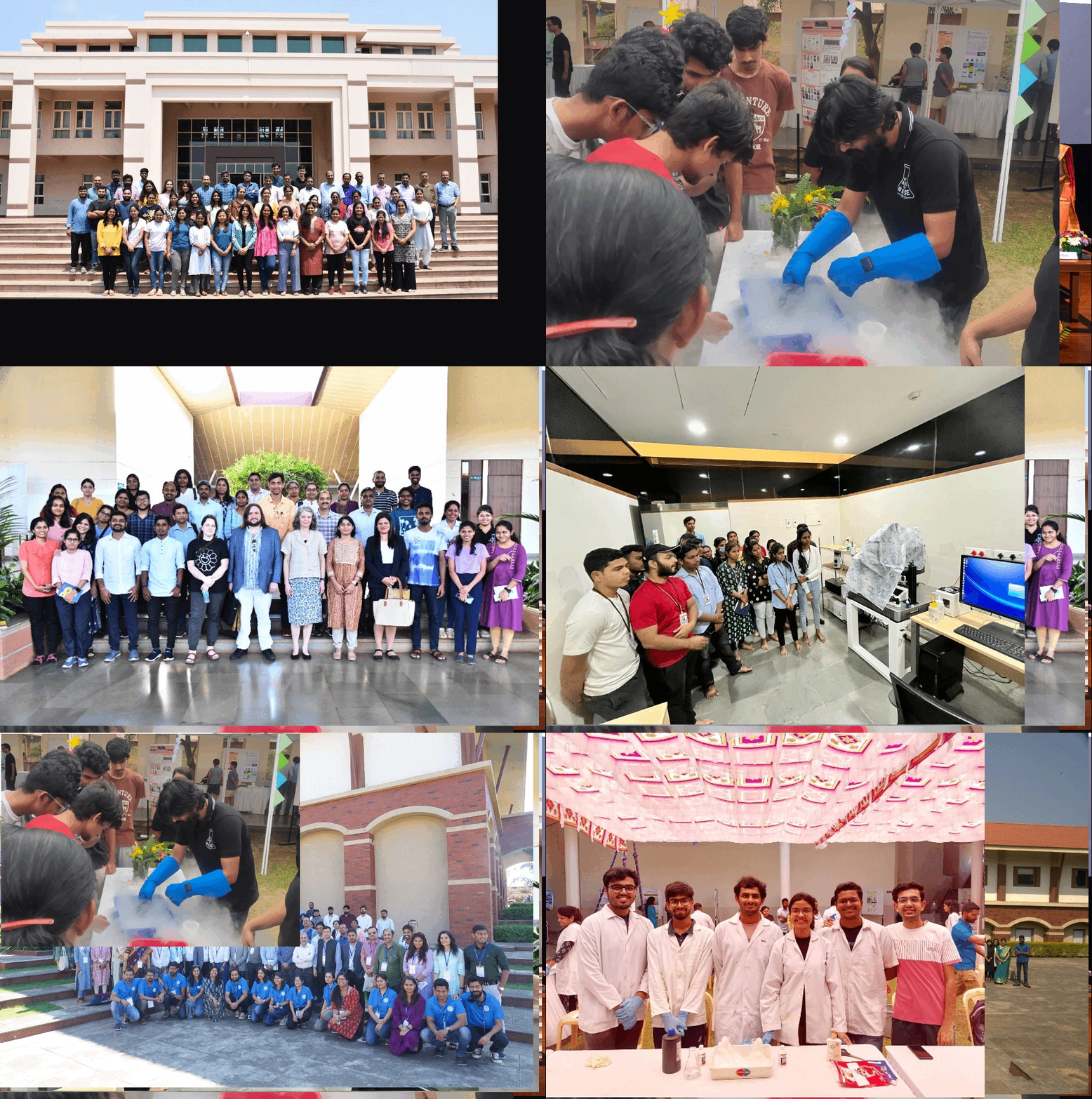
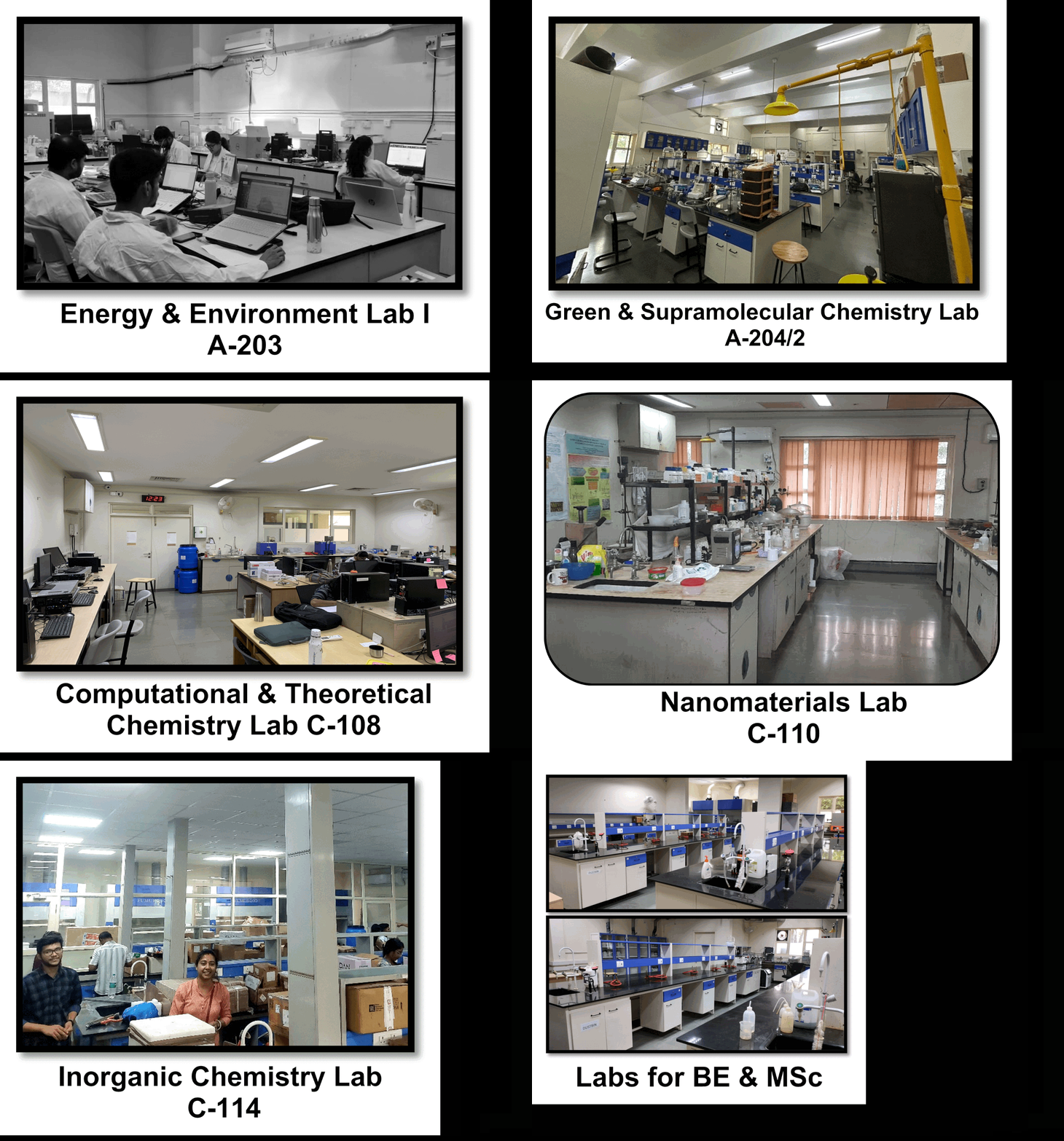
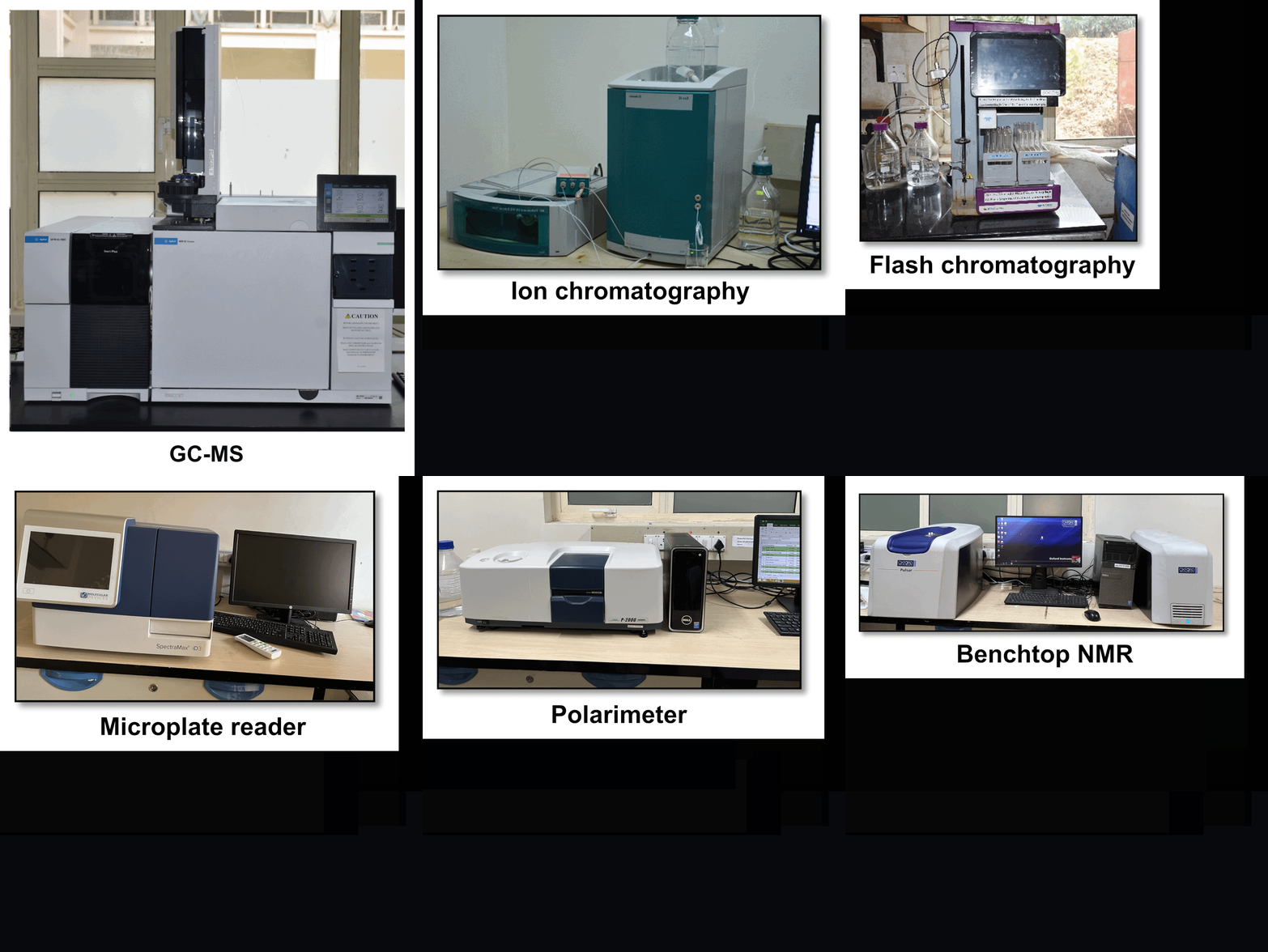
Established in July 2004, the Department of Chemistry at BITS, Pilani -KK Birla Goa Campus has marked its presence in Academia within India and abroad.  The department is focussed in both teaching and  high quality research (basic and multidisciplinary) in the frontier areas of chemistry and its interface with allied disciplines. The department is well quipped with state of the art research facility, library resources (e-journals) and had established collaborations with various national and international laboratories within this short period.
show more

Research

The department, right from its inception has given high priority for research. The faculty is actively engaged in cutting edge research in the frontier areas of Inorganic, organic, physical, and analytical and theoretical chemistry with further specialization in
1.    Biosensors and bioanalytical chemistry
2.    Nanochemistry and nanomaterials
3.    Photochemistry and Bioinorganic chemistry
4.    Computational and theoretical chemistry
Till date, the department has received 19 sponsored research projects (including two international) from various national and international agencies with funding amounting to Rs. 605 lakh. The major funding agencies are (Dept. of Science & Technology DST, India, Council of Scientific and Industrial Research CSIR, India, Indian Council for Agricultural Research ICAR & The World Bank, Defence Research and Development Organization DRDO, Board of Research in Nuclear Sciences BRNS, India, Department of Biotechnology, India, The Swedish Research Council, Sweden and The Royal Academy of Engineering UK. Currently there are 18 research students and one visiting scientist in the department.
show more

Courses

CHEM F111 : General Chemistry                                            
This course is aimed at providing an integrated overview of chemistry. Topics to be discussed will include: quantum theory; electronic structure of atoms and molecules; spectroscopy; chemical thermodynamics; chemical kinetics; stereochemistry; important classes of organic reactions such as nucleophilic aliphatic substitution, elimination, electrophilic addition, free radical addition; organic synthesis; chemistry of selected main group elements; coordination chemistry, etc.

CHEM C211 : Atomic and Molecular Structure

Elements of quantum theory; the Schrodinger equation; some exactly solvable models; angular momentum; hydrogen-like atoms; approximation methods; electronic structure of many-electron atoms; molecules-Valence Bond and molecular orbital theories; semi-empirical treatments-huckel theory; molecular spectroscopy.
 
CHEM C231 : Chemistry Project Laboratory *

The course includes projects involving laboratory investigation or laboratory development in chemistry. The course is normally available to students of second or higher level. The course must coterminate with a project report.
CHEM C232 : Chemistry of Organic Compounds

Electrophilic  and  nucleophilic  aromatic  substitution; nucleophilic additions to carbonyl compounds, aldol and related condensations; amines, malonic ester and acetoacetic ester synthesis; carbohydrates; orbital  symmetry  and  chemical  reactions; hetrocyclic compounds.
CHEM C311 : Chemical Kinetics

Discussion of reaction rate theory, kinetics and mechanism of various types of reactions, effect of temperature on reaction rates, energy of activation, theories of reaction rates and photochemistry.
 
CHEM C321 : Chemical Thermodynamics

Review of classical thermodynamics and an introduction to statistical mechanics with applications to chemical systems.
 
CHEM C322 : Quantum Chemistry

Review of the postulates of quantum mechanics and some exactly solvable potential problems; angular momentum; variation method; stationary state and time dependent perturbation theory; atomic structure: antisymmetry, determinantal wave functions, SCF method, coupling of angular momenta, spectra; symmetry: point groups, representations, direct product, projection operators; molecules – Born-Oppenheimer approximation, molecular Hartree Fock calculations, VB and MO theories: ab initio and semi empirical methods; symmetry and molecular spectra.
 
CHEM C331 : Structure and Reactivity of Organic Compounds

Structure & reactivity; oxidation and reduction, aliphatic nucleophilic substitution; aromatic substitution reactions; eliminations, addition to carbon heteromultiple bonds and rearrangements; stereo chemistry of cyclic compounds.
 
CHEM C332 : Synthetic Organic Chemistry

Retrosynthetic analysis, synthetic strategies, protecting groups, carbon-carbon bond forming reactions, functional group disconnection, carbon-carbon bond disconnection, ring annelation, multistep synthesis, synthetic equivalents, asymmetric synthesis.
 
CHEM C352 : Bonding in Inorganic Compounds

Point groups and molecular symmetry; uses of point group symmetry; ionic bonding; covalent bonding; valence bond and molecular orbital theories of simple compounds; electronegativity; VSEPR model; fluxional molecules; ionic and covalent solids; band theory; dipole related forces; hydrogen bonding; coordination compounds: VB, crystal field and MO theories, electronic spectra and magnetic properties.
 
CHEM C362 : Chemistry of Inorganic Compounds

Periodicity; periodic anomalies; p orbitals in pi bonding; d orbitals in non-metal chemistry: similarities and contrasts within a group, e.g., C-Si, N-P; chemistry of boron hydrides, aluminosilicates; hydrogen; acid-base concepts; hard and soft acids and bases; chemistry in aqueous and nonaqueous media; halogens and noble gases; coordination chemistry: different coordination numbers, chelation, isometrism and reactivity; chemistry of metals; introduction to bioinorganic and organometallic chemistry.
 
CHEM C391 : Instrumental Methods of Analysis

Principles and practice of modern instrumental methods of chemical analysis.  Emphasis on spectroscopic techniques such as UV-Visible, infrared, NMR (1H, 13C and other elements, NOE, correlation spectroscopies), ESR, atomic absorption and emission, photoelectron, Mossbauer, and fluorescence.  Other topics will include mass spectrometry, separation techniques, light scattering, electroanalytical methods, thermal analysis, and diffraction methods.
 
CHEM C411 : Chemical Experimentation

Specially designed for M.Sc. (Hons.) Chemistry; cannot be taken by others under any circumstances. This laboratory course is designed only for M.Sc. (Hons.) Chemistry students in order to develop competence in selected techniques of modern analytical chemistry.
 
CHEM C491 : Special Projects

Short-term research-based course.
show more

Faculty

Our faculty have extensive experience in industry, research as well as teaching. Our strength is a reflection of their skills, innovation and drive.

Department / Faculty Achievements

1. Dr. NN Ghosh’s paper in the most cited
    articles of Progress in Polymer Science
 

2. CSIR-funded projects have recently
    been received by -
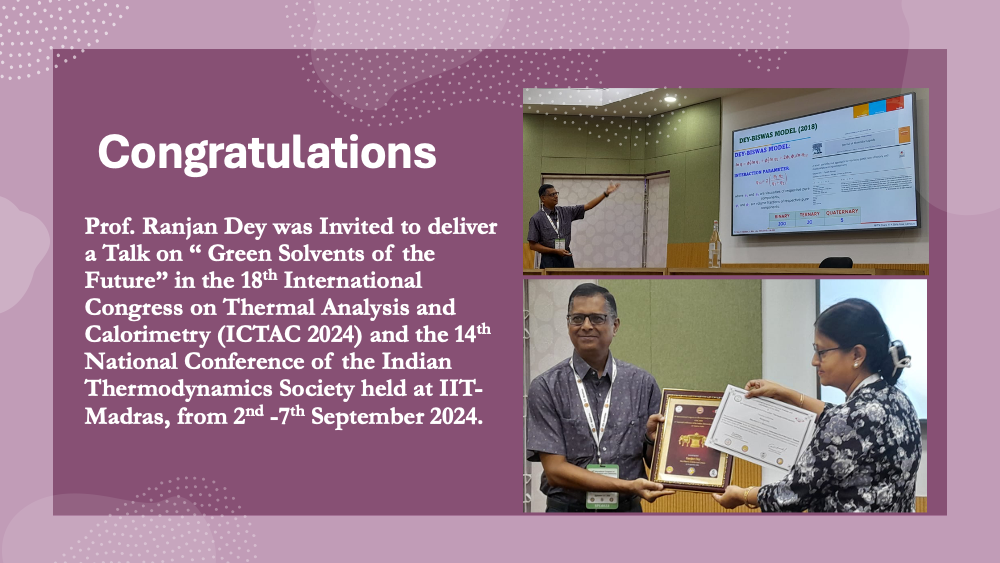
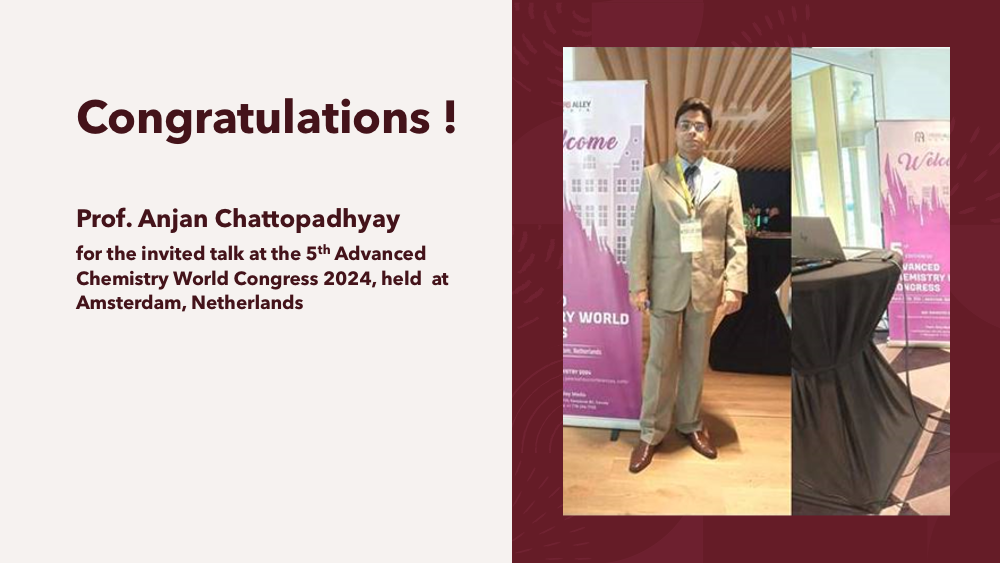
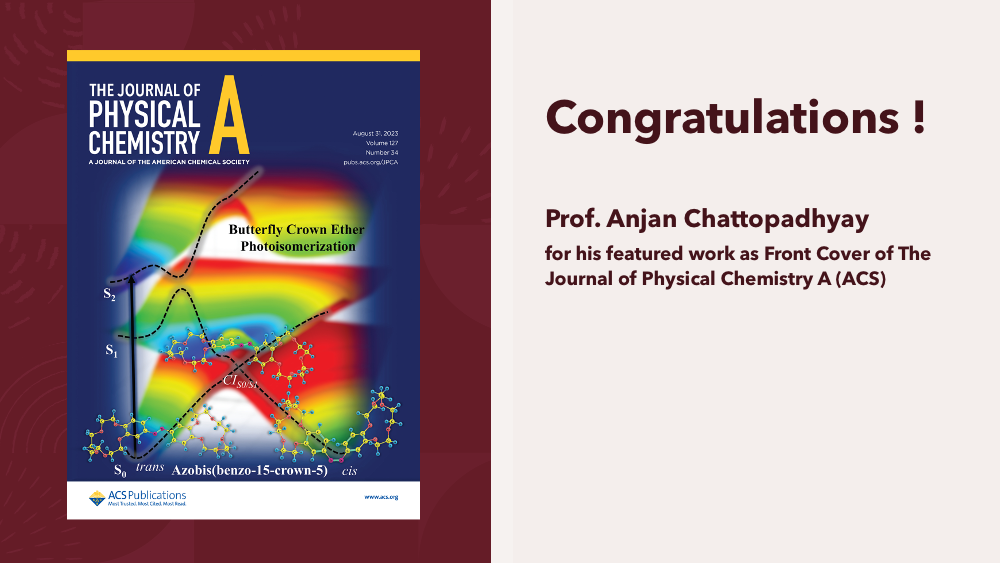
   Dr. Anjan Chattopadhyay,Dr. Ranjan Dey,
   Dr. Mainak Banerjee and Dr. P.Bhavana


3.  Dr. N.N. Ghosh has successfully completed his six month of sabbatical leave at Drexel University USA.
 
4.  Department has been approved for funding under the FIST program of DST.

5.  Dr. Sunil Bhand was invited to Linkoeping University, Sweden as faculty opponent for Ph.D. Thesis in nanosensors during August 2011.

6. The department is honoured to lead a multi-institutional consortium project as consortium project leader from ICAR under National Agricultural Innovation project with toal funding of the project Rs. 750 lakh. (Dr Sunil Bhand, Consortium PI from BITS Pilani) with partner institutes NDRI Karnal, IIT Delhi and Punjabi Univeristy Patiala.
 

Quick Links

    An institution deemed to be a University estd. vide Sec.3 of the UGC Act,1956 under notification # F.12-23/63.U-2 of Jun 18,1964

    © 2011-13 Centre for Software Development,SDET Unit, BITS-Pilani, India.

    Designed and developed by fractal | ink design studios