


About the Symposium
NeuroEngineering is a dynamic, interdisciplinary field rapidly gaining momentum in India. While global standards are well-established, India is now positioned to bridge the gap between its world-class fundamental research and industrial commercialization. By advancing technologies like brain-machine interfaces, wearable EEG/fNIRS systems, and digital mental health tools, we can transform cutting-edge science into impactful societal solutions.
This symposium would serve as a powerful catalyst for this growing ecosystem. By bringing together academia, engineering, and industry, we aim to:
- Foster Collaboration: Spark intensive discourse and the cross-fertilization of visionary ideas.
- Inspire Innovation: Develop forward-looking curricula and research pipelines that empower the next generation of pioneers.
- Bridge the Market Gap: Accelerate the development of homegrown, point-of-care neurotechnologies.
Together, we aim to create a shared vision to establish neurotechnology training, research and applications in India - turning scientific excellence into meaningful technological progress.
Click here for the Poster.
The symposium welcomes clinicians, faculty, scientists, and both PhD and undergraduate students interested in Neurotechnology. It offers a broad overview of the field, emerging research and industry opportunities, and a forum to engage with leading experts and upcoming industry partners.
Participants submitting abstracts will present their work in the poster session, and selected abstracts, recommended by an expert committee, will be invited for platform presentations.
Inaugural Address
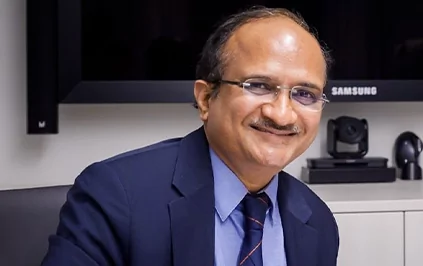
Senior Professor & Vice Chancellor
Birla Institute of Technology & Science
Keynote Speakers

Professor of Neurology
Associate Director, ,
Penn Center for Neuroscience and Society
University of Pennsylvania, PA, USA

Professor, Biomedical Engineering,
Johns Hopkins University,
Baltimore, USA

Steven M. Southwick Professor of Psychiatry
Professor in the Child Study Center and of Neuroscience
Department of Psychiatry
Yale School of Medicine, Yale University, USA

Professor and Head, Department of Neurology,
All India Institute of Medical Sciences, New Delhi

Director and Senior Consultant
Neurosurgery, Manipal Hospital,
Mukundpur, Kolkata.

Professor, Department of Psychiatry
Postgraduate Institute of Medical Education and Research
Chandigarh.

Director, Centre for High Impact Neuroscience and Translational Applications (CHINTA),
TCG Crest, Kolkata
Invited Speakers

Founder and Promoter Director
Voxelgrid Innovations Pvt. Ltd.,
India

Assistant Professor
Biologial Sciences and Bioengineering
IIT-Kanpur, Kanpur

Scientist-VI & Professor
National Brain Research Centre

Professor
Director, MDI Gurgaon

Professor, MD | World’s First PhD in Telepsychiatry

Professor of Cognitive Neuroscience,
Hong Kong Baptist University,
Hong Kong SAR

Professor of Psychology
Head of Department for Psychology and Cognitive Science
Ashoka University, Sonepat, Hariyana

Professor and Sir J. C. Bose National Fellow
JNCASR

Professor and Chairman
Molecular Biology and Genetics Unit and Neuroscience Unit
JNCASR, Bengaluru

Associate Professor
Centre for Neuroscience
IISc Bengaluru

Professor and Chair, Centre for Neuroscience
IISc Bengaluru
Schedule
Symposium schedule
Three days of keynotes, plenary and distinguished lectures, and panel discussions. Select a day to view its full programme.
Session 1 · Opening Ceremony
D. Sriram (Chief Guest) · Krishanu Ray (Chair)
Session 2 · Keynote Lecture
Marc Potenza
Chair: Venkashwaran Rajagopalan
The Promise and Perils of Advancing Digital Technologies: From Treating to Promoting Addictive Behaviors
Plenary Lecture — Joydeep Bhattacharya
Designing for Variability: Neuroengineering at the Edge of Creativity
Distinguished Lecture — Nandini Chatterjee Singh
The Rasa in the Raga – behaviour and brain responses to Hindustani music ragas
Session 3 · Keynote Lecture
Geoffrey Karl Aguirre
Chair: Joydeep Bhattacharya
The environmental and neural mechanisms of photophobia
Distinguished Lecture — Ramesh Mishra
To be announced
Distinguished Lecture — Abdul Majib
To be announced
Distinguished Lecture — Arjun Arunachalam
Development of lightweight, next generation MRI scanners
Session 4 · Poster Session
Session 5 · Panel Discussion
Krishnanu Ray and Souri Banerjee
Session 6 · Keynote Lecture
Milind Deogaonkar
Chair: Geoffrey Aguirre
Patterns, oscillations and connectomes: The Language of the Brain
Distinguished Lecture — Davor Mucic
Digital Mental Health – Is the Future Now?
Session 7 · Keynote Lecture
Sumantra Chattarji
Chair: Krishanu Ray
Neurobiological underpinnings of SCA12: a small example of translational neuroscience in India
Plenary Lecture — KS Narayan
Developing Chick Retina as a Blind Retina Model and Introducing Artificial Photoreceptors to Revive Light Induced Ganglion Neuron Firing
Distinguished Lecture — Ravi Manjithaya
Role of autophagy in movement disorders
Session 8 · Keynote Lecture
Manjari Tripathi
Chair: Joydeep Bhattacharya
Capturing magnetic currents in neurons – maximising precision
Session 9 · Keynote Lecture
Arvind Sahai
Chair: Nandini Chatterjee-Singh
The Biology of Leadership: Connecting Neuroscience to Leadership Actions and Behavior Change in Organizations
Session 10 · Keynote Lecture
Kathleen Cullen
Chair: Sudip Nag
How the Brain Keeps Us Balanced: From Predictive Neural Codes to Neuroprostheses
Session 11 · Plenary Lecture
Sridharan Devarajan
Chair: Arpan Banerjee
Tracking and training attention with a cognitive brain-machine interface
Distinguished Lecture — Sudip Nag
AI Neural Implants
Invited Lecture — Kaustubh Deshpande
Engineering Thin-Film Interfaces for BCIs
Session 12 · Plenary Lecture
Arpan Banerjee
Chair: Venkatakrishnan Ramaswamy
Representations to mechanisms: Why and how
Distinguished Lecture — Arjun Ramakrishnan
Neuroengineering for Mental Health: understanding the mechanisms underlying suboptimal decision making in anxious individuals
Session 13 · Plenary Lecture
Supratim Ray
Chair: Sridhar Devrajan
Using Gamma Oscillations to understand the effect of meditation and non-invasive stimulation
Session 14 · Valedictory Function
Chair: K. Naga Mohan and Balaram Ghosh
Registration
| Category | Amount | GST | Total |
|---|---|---|---|
| Ph.D. Student / Postdoc | ₹ 5,000 | ₹ 900 | ₹ 5,900 |
| Undergraduate / Postgraduate Student # | ₹ 3,000 | ₹ 540 | ₹ 3,540 |
| Academia (Faculty, Staff, etc.) | ₹ 8,000 | ₹ 1,440 | ₹ 9,440 |
| Industry | ₹ 10,000 | ₹ 1,800 | ₹ 11,800 |
Abstract submission closes on October 10, 2026
Registration covers conference kit, meals and refreshments
#Undergraduate and Postrgraduate Students will get a refund of their registration fees after sucessfully attending the conference.
Payment Link: https://u.payu.in/PAYUMN/lJdCywaoAor5
Registration Link: https://forms.gle/szUAdhLZqtmJWQDz9
Accommodation (List of Hotels & Rates)
-
- Hostel (Students only): ₹ 600 per day.
- Hotel (Double Occupancy)*: ₹ 3000 per day + GST.
- Hotel (Single Occupancy)*: ₹ 6000 per day + GST.
*Estimated prices, to be paid to the hotel
Venue


Birla Institute of Technology and Science, Pilani - Hyderabad campus is one of the premier technical and science institutes of higher learning in India. It was established by Birla Institute of Technology and Science, Pilani (Rajasthan) as one of its latest campuses in the year 2008 with the first batch graduating in the year 2012. BITS, Pilani is one of India’s top technical and science universities established under Sec. 3 of the UGC act.
The sprawling campus is built amidst lush greenery spreading over 200 acres of land at Jawahar Nagar, Shameerpet, Hyderabad. Surrounded by natural beauty, the campus is about 70 kilometers away from Rajiv Gandhi International Airport, Shamshabad and 27 kilometers from Secunderabad railway station. The campus is easily accessible by road with a bus stop just outside the campus. Public transport (route# 212) runs every one hour from Secunderabad to the campus. The campus is in close proximity to many schools, medical facilities, and recreational centers.
The campus is built with state-of-the-art infrastructure without affecting the scenic beauty of the area. Modern laboratories, well-furnished classrooms, lecture theatre complexes, student activity center, auditorium, playground and modern ICT infrastructure, all come together to make BITS Pilani, Hyderabad campus a well-equipped campus.
Around 750 bright minds are admitted every year into first degree, higher degree and doctoral programmes of the institute through a single entrance test conducted by BITS, Pilani. Being a campus of BITS, Pilani, Hyderabad campus follows the same curriculum, teaching methodologies and educational practices of its’ parent campus. BITS, Pilani, Hyderabad campus is fully residential, housing over 3200 students, around 170 faculty members and 160 technical and support staff. The teaching faculty brings with them extensive research, teaching and industry experience to offer comprehensive education to students. Currently around 65 research projects are ongoing in the campus, most of which are supported by prominent funding agencies from India and abroad.
Campus life is vibrant and stimulating. Student calendars are filled with a healthy mix of extracurricular activities through various clubs and departments. There is a culture of freedom coupled with a holistic environment for multidimensional growth of a student personality. Over the past few years, students have been placed at multinational companies, government organizations, and research institutes across the globe. The students of the campus are truly ready to become the innovators of tomorrow. (How to reach BITS Hyderabad)


Organizing Committee
Convenor

Senior Professor
Department of Biological Sciences
Co-Convenor

Professor
Department of Biological Sciences
Member

Professor
Department of Pharmacy
Member

Associate Professor
Department of Computer Science
Member

Assistant Professor
Department of Electrical and Electronics Engineering
Member

Assistant Professor
Department of Humanities and Social Sciences
Reach BITS Pilani, Hyderabad Campus
1. From Hyderabad Airport
Option 1: Taxi (Recommended)
• Ola/Uber - Approximate fare: ₹1700 - ₹2000
• Taxi contact: Swamy – 8309584792 (call a day before to book, Fare: ₹1800). Can share with up to 3 people.
Option 2: Bus
• Take a bus to JBS (Jubilee Bus Station-Secunderabad).
• Follow directions from Secunderabad Station / JBS below.
2. From Secunderabad Station / JBS
Option 1: Direct bus to BITS (Outside Platform 1)
• Bus number: 212 (Destination: BITS)
• Timings: Around 7:50 AM, 8:50 AM, 3:50 PM, 4:50 PM
Option 2: Indirect bus + auto
• Board any bus going to Karimnagar or Siddipet.
• Get down at Dongala Mysamma Junction (near Thumkunta Village).
• Take an auto to BITS (about 4 km).
Option 3: Taxi
• Ola/Uber - Approximate fare: ₹600 - ₹800
• Taxi contact: Swamy – 8309584792 (call a day before to book, Fare: ₹1000). Can share with up to 3 people.
3. From Any Other Location in Hyderabad
• Take an MMTS train or bus to Secunderabad Station / JBS, then follow the directions above.
• No direct buses from other locations.
• Alternatively, book a taxi directly.


BITS Hyderabad Campus
FACULTY CONTACTS
Faculty Coordinator:
Prof. Krishanu Ray
Prof. K. N. Mohan
Department of Biological Sciences
BITS Pilani Hyderabad Campus
Mail ID: neurosymp@hyderabad.bits-pilani.ac.in
