

Climate Change and Epistemic Recovery: Indigenous Pathways.
The politically loaded term “Indigenous” is widely used by ethnic communities to reclaim their rights. This approach seems to divide the world into two halves: one half (Indigenous) resisting the hegemonic forces of industrialisation-driven society and economy; the other half (non-Indigenous) caught in the cross-current of modernity. John A. Grim explains, “Who are indigenous peoples? In a straightforward manner Indigenous means anything produced, growing, or living naturally in a particular region or environment. Yet, there are semantic and political difficulties involved in determining who is Indigenous” (2017, xxxvii), because of the geospatial making of territories since the beginning of colonisation in the fifteenth century.
Given this, when human communities are relocated to new environments following the colonisation of Indigenous spaces and places within the country, can they be considered Indigenous? Another difficulty in determining Indigeneity lies in the phrase “particular region,” because many ethnic communities had settled, resettled, and moved from one place to another before the emergence of modern nation-states. A closer look into the politicised identity of Indigeneity in South Asia familiarises us with the precarious state of being of Indigenous communities that constantly face persecution by ethnic militias for contesting ethnicities.
Therefore, in postcolonial nation-states, will the Tripuri, Chakma, and Rajbangshi communities lose their Indigeneity because of their displacement from Bangladesh when they are forced to migrate to India due to ethnic violence? Grim points out that, according to the United Nations, “Indigenous refers to ethnic groups with clear cultural, linguistic, and kinship bonds who have been so marginalized by modern nation-states that their inherent dignity and coherence as societies are in danger of being lost” (Grim 2001, xxxvii).
Many Indigenous communities have suffered cultural loss as traditional ways of life have waned under new sociopolitical and cultural influences following the colonisation of Indigenous lands, although some practices remain in residual forms. Following the occupation by the Dutch VOC, Indonesia’s Banda Island was peopled with indentured nutmeg-plantation workers from other Asian countries, including India, who have now become Indigenous people there (Ghosh 2021).
While writing about the darker side of modernity, decolonial scholars such as Aníbal Quijano, Walter Mignolo, Nelson Maldonado-Torres, and Dunford Robin have argued that coloniality made possible the accumulation of capital that depended on the disposability of Indigenous bodies. Therefore, the modern world, which is an extension of the old order and is based on the matrix of coloniality, signifies the imposition of a coercive global coloniality.
In order to contest this coloniality of power, one must look into different sites for the recovery of the epistemes of Indigenous cosmologies, because these communities preserve practices rooted in local traditional cultures. In settler colonies, the problem emerged differently. In Canada, the United States, South Africa, Australia, and New Zealand, white-settler colonialism has eroded the cultural identities, traditional knowledge systems, and sovereignty over the lands of Indigenous communities.
Māori, Native American, and Aboriginal Australian communities have been deeply impacted by colonialism and modernity. Through the coercive dispossession of Indigenous territories, colonisers imposed foreign legal and economic systems and social structures, thereby marginalising Indigenous cultures and excluding Indigenous people from decision-making processes concerning their lands and resources (Simpson 2004).
According to Wolfe (2006), settler colonialism is characterised by a logic of elimination, where the primary aim is not merely to exploit Indigenous peoples but to displace them in order to establish settler societies. This displacement has resulted in the loss of access to traditional territories and resources that have been vital to Indigenous ways of life.
The enslaved people and indentured labourers brought to these countries during colonial times were also doubly marginalised. Despite these challenges, Indigenous communities have shown remarkable resilience and agency. Many are actively revitalising their languages, reclaiming traditional knowledge, and fighting for legal recognition of land and cultural rights.
There is a growing movement among Indigenous scholars and activists to decolonise research and education, seeking to re-centre Indigenous perspectives and narratives that were long suppressed by colonial histories (Smith 2012). According to the United Nations, “200 groups of Indigenous Peoples currently live in voluntary isolation and initial contact … They choose to live detached from the rest of the world and their mobility pattern allows them to engage in gathering and hunting, thereby preserving their cultures and languages.”
Apart from these Indigenous communities, there are others such as the Marshallese, who live in societies deeply impacted by the legacy of nuclear testing by the United States and rising sea levels. Indigenous communities are often divided between those who support the economic benefits of development projects and those concerned about their impacts on land and culture.
The impact of such transformations can be psychological (Albrecht, 2011), social and cultural (McGregor, 2012), and economic, according to the United Nations. Indigenous peoples’ deep connection to the land, traditional ways of living (Ford et al., 2016), and unique knowledge systems make them exceptionally vulnerable to the effects of climate change while also making them critically important to understanding its complexities.
For instance, “From a Māori perspective forests, rivers, and oceans can have their mauri restored through rituals of conservation accompanied by appropriate ritual prayer forms and ceremonies” (Henare 2001, 209). In much the same way, nature worship and rituals among Hindus (Porteous 1928, 199; Biswas & Ryan 2024), and among ethnic communities such as the Adi tribe of Arunachal Pradesh and the Bodos of Assam, explain the reverence of humankind towards the environment.
This reverence finds concrete expression in the ancient Indian tradition of sacred groves, described as “tracts of sacred forests which have been completely or nearly completely immune from human interference on grounds of religious beliefs” (Gadgil and Vartak 1974, 313).
Nature conservation stems either from awe toward a superior power or from a sense of equality that confers respect on all human and non-human life forms. This principle is embodied in the Bishnoi conservation philosophy, which regards trees and animals as entitled to the same right to life as human beings.
Considering that the lure of modernity and its escalating impact on the globe are now an unalterable reality, there is a need to re-envision a sustainable way of life based on an eco-friendly system by revisiting the wisdom of Indigenous communities. Indigenous knowledge systems certainly have much to offer as a possible remedy (Houde 2007).
According to the United Nations, “Climate change poses threats and dangers to the survival of indigenous communities worldwide, even though indigenous peoples contribute the least to greenhouse emissions. Indigenous peoples are vital to and active in the many ecosystems that inhabit their lands and territories and may therefore help enhance the resilience of these ecosystems.”
Indigenous peoples interpret and respond to the impacts of climate change in creative ways, drawing on traditional knowledge and other technologies to find solutions that may help society at large cope with impending environmental changes.
Indigenous knowledge, cultural resilience, and ecological traditions offer important pathways for rethinking modernity, challenging coloniality, and developing sustainable relationships between human communities and the natural world.
About BITS Pilani
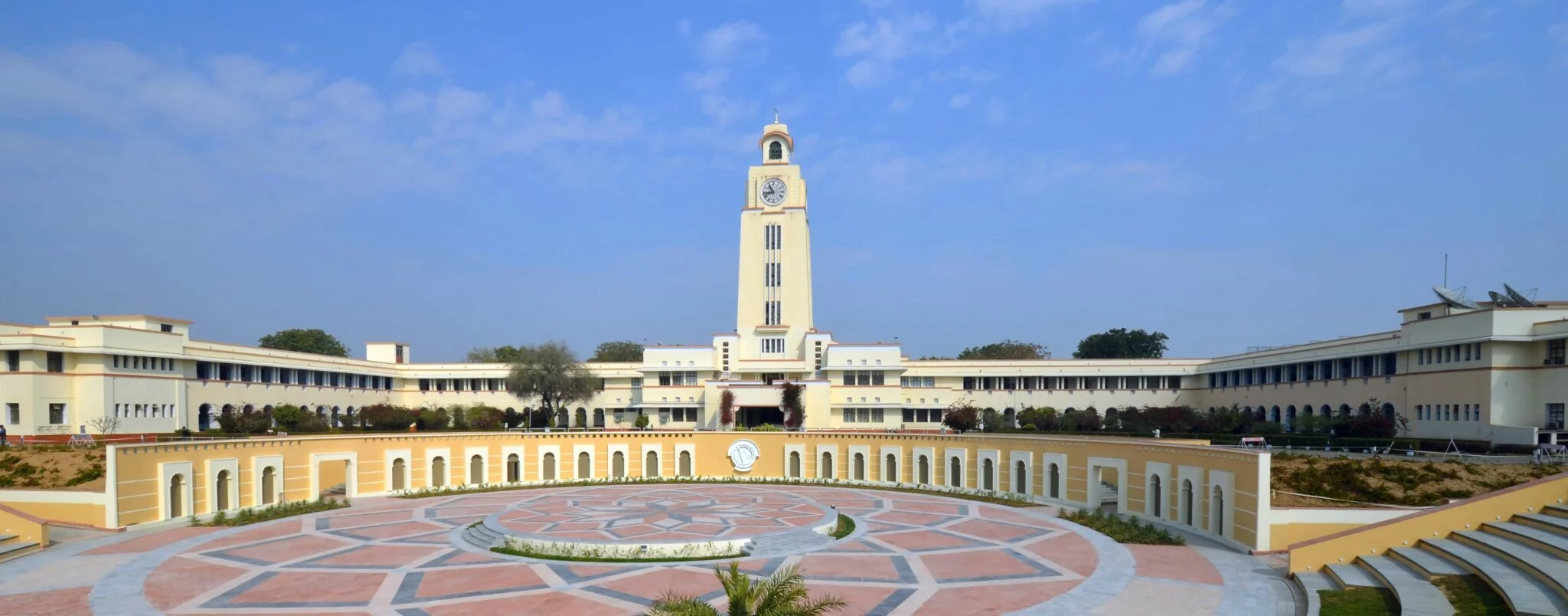
Birla Institute of Technology & Science (BITS) Pilani is an all-India institute for higher education. Founded with strong technical collaboration with MIT, USA, under the Ford Foundation Grant, BITS Pilani has evolved into one of India’s leading institutes of higher education. It is distinguished by its illustrious legacy, modern campuses, and exceptional placement records.
The institute’s commitment to excellence, adherence to merit, transparency, innovation, and enterprise has been the hallmark of its journey. In addition to its Pilani campus, BITS Pilani has campuses in Dubai, Hyderabad, Goa, and Mumbai.
The past six decades have been exceptional for BITS Pilani, marked by groundbreaking achievements in research, teaching, and the promotion of entrepreneurship. The institute continues to contribute significantly to technological advancement, academic excellence, and innovation.
ABOUT DEPARTMENT OF Humanities and Social Sciences
The Department of Humanities and Social Sciences is involved in research and teaching. It offers higher degree programs leading to the award of Doctoral and Master’s degrees. The Master’s program in General Studies, M.Sc. (Tech), is oriented along the streams of Media and Communication as well as Development Studies.
“What do we propose to do here? We want to teach real science, whether it is engineering, chemistry, humanities, physics or any other branch. We want to develop a scientific approach in Pilani, which means there would be no dogma. There will be a search for truth”.
Vision of Ghanshyam Das Birla, founder of BITS Pilani
The study of humanities was thus part of the founding vision of the Birla Institute of Technology and Science, Pilani. This enabling vision, represented by the lotus at the heart of the emblem of BITS Pilani, continues to guide the Institute in its plan document Vision 2020: Mission 2015 that envisages an ever greater emphasis for the humanities in the curriculum, making it mandatory for all degree programmes.
With twenty-three faculty members working in and across the disciplines of Communication Studies, Development Studies, Digital Media, Film Studies, Geography, History, Language, Literature, Philosophy, Politics, Psychology and Public Administration, the Department of Humanities and Social Sciences offers over thirty elective courses -on an average, per semester- for students across disciplines and degree programmes. The laboratories for languages, music and Creative Media along with a rich collection of materials in the BITS Pilani Library are vital elements in the pedagogy of the courses taught here. Many of these are interdisciplinary, and all courses combine rigour with variety in both teaching and learning, which is a legacy bequeathed by a tradition of over five decades.
The study of humanities and languages in Pilani may be traced back to 1943, when the Birla Intermediate College became a Degree College. With the founding of the Birla Institute of Technology and Science as a degree awarding university in 1964, undergraduate and post-graduate programmes in the humanities were initiated. Since then, BITS Pilani has witnessed continuous Moulding in the study of the humanities. The degree programmes of B.A (General) and M.A in Economics, English, Hindi, History, and Political Science were initiated in 1964 and continued until 1973-4, facilitating a reordering of the internal organizational structure with the formation of cluster groups in Economics, Humanistic Studies, and Languages. The Humanistic Studies group and the Languages group were transformed into independent departments, and remained so until 2012, when the two coalesced into the Department of Humanities and Languages. However, many research projects and taught courses offered by the Department contain elements from the Social Sciences. In recognition of this interdisciplinary character as well as to bring uniformity in nomenclature across the four campuses of the University, the Department was renamed as Department of Humanities and Social Sciences in October 2013.
Thematic Lines
We invite scholarly responses that can offer critical insight into the following thematic lines:
